
THE INVESTIGATION
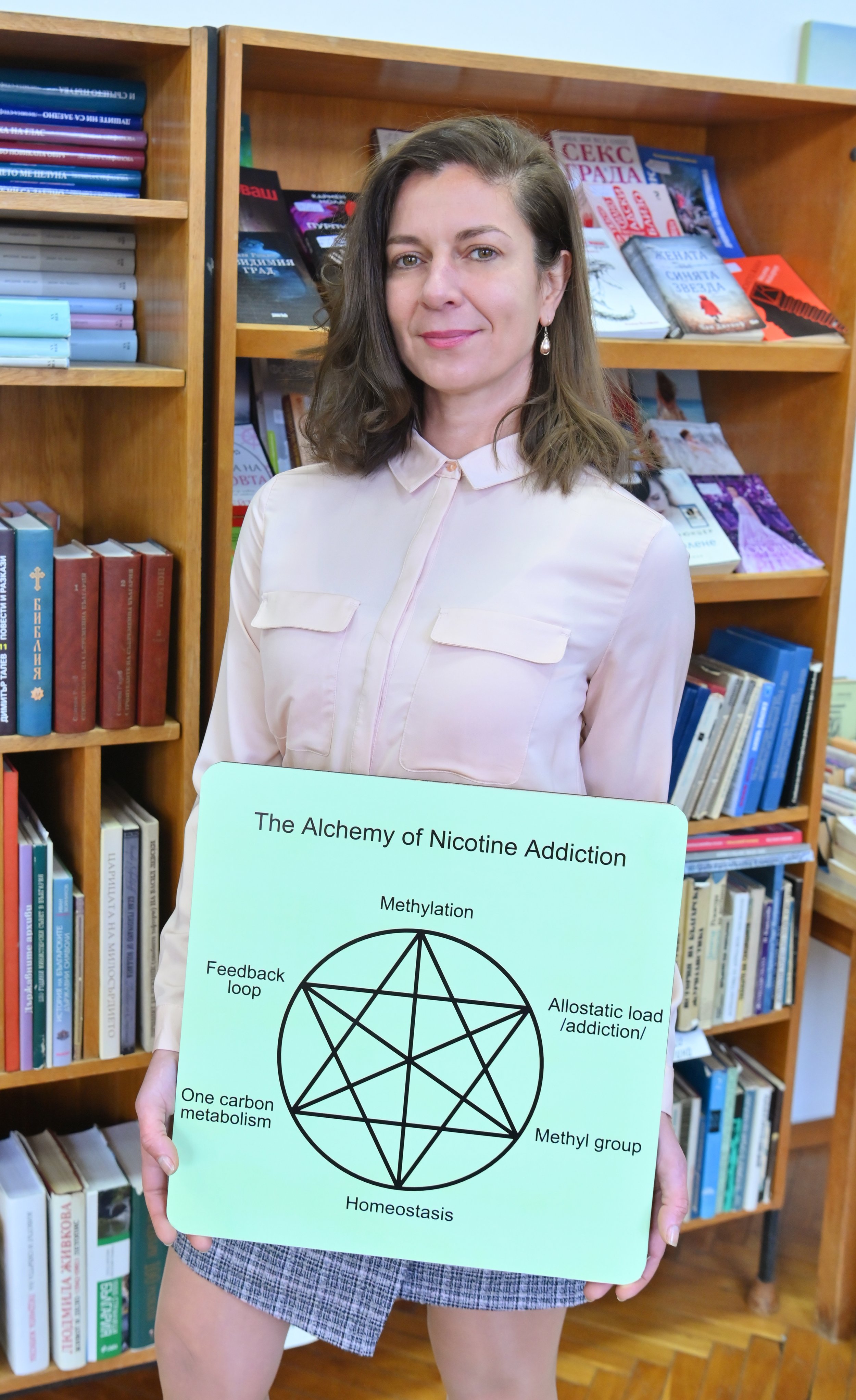
Irena Boycheva
Independent Researcher in Biological Regulation and Stimulation
Investigating biological activation and addictive energy since 2014
Some questions do not disappear.
Not because we repeat them.
Because something within them remains unresolved.
They remain active within the system that first perceived them. Not as thoughts, but as continuation. They move through experience, memory, observation, and different forms of knowledge, searching for the structure capable of resolving them.
I did not begin with a theory.
I began with a question that would not settle.
Why does the body continue to seek stimulation even when the mind wants to stop?
The question remained active. It did not resolve through existing explanations. Over time, it became clear that the difficulty was not located in the substance alone, nor in behavior, nor in a lack of discipline. Something in the biological process itself was not reaching completion.
The signal continued.
Not because it was intentionally repeated, but because its resolution was not yet visible.
What began as a question about addiction gradually became a larger investigation into biological activation, regulation, and the conditions under which completion becomes possible.
Since 2014, I have followed this investigation across physiology, neurobiology, biochemistry, endocrinology, metabolism, systems biology, and the study of biological regulation. I also found myself returning to earlier attempts to understand transformation, balance, and completion through natural philosophy and systems thinking.
Across these fields, fragments of understanding existed. What remained less visible was the structure connecting them.
A recurring pattern began to emerge.
Activation remained active beyond its natural completion.
New stimulation entered before previous processes had fully resolved.
Rest no longer restored clear separation within the system.
What appeared as repetition often reflected continuation.
What appeared as dependence often reflected unresolved activation.
What appeared as a lack of control often reflected a process still searching for completion.
The organism does not only seek stimulation.
It seeks resolution.
Modern environments expose biological systems to continuous chemical, digital, cognitive, and environmental inputs. Signals overlap. Recovery shortens. Processes that evolved to complete in rhythm are often required to function without sufficient interval.
Under these conditions, continuation can become structure.
What was once temporary can become baseline.
The organism adapts.
But adaptation is not always equivalent to completion.
The work presented in The Architecture of Addictive Energy emerged from the recognition that persistent stimulation may be influencing biological regulation in ways not yet fully described within existing frameworks.
The work presented in Biological Time continues this investigation by exploring how activation redistributes through living systems, how experiential time changes when processes no longer fully separate, and how perception itself may reorganize when activation is allowed to return to the whole system.
I was not searching for a new theory.
I was following a question until it became visible.
Some signals persist across time because the conditions required to resolve them take time to emerge.
When the structure capable of answering the question becomes visible, the signal that carried it can finally settle.