€15.51

Addiction is often treated as a behavioral problem.

This book approaches it as a biological timing problem.

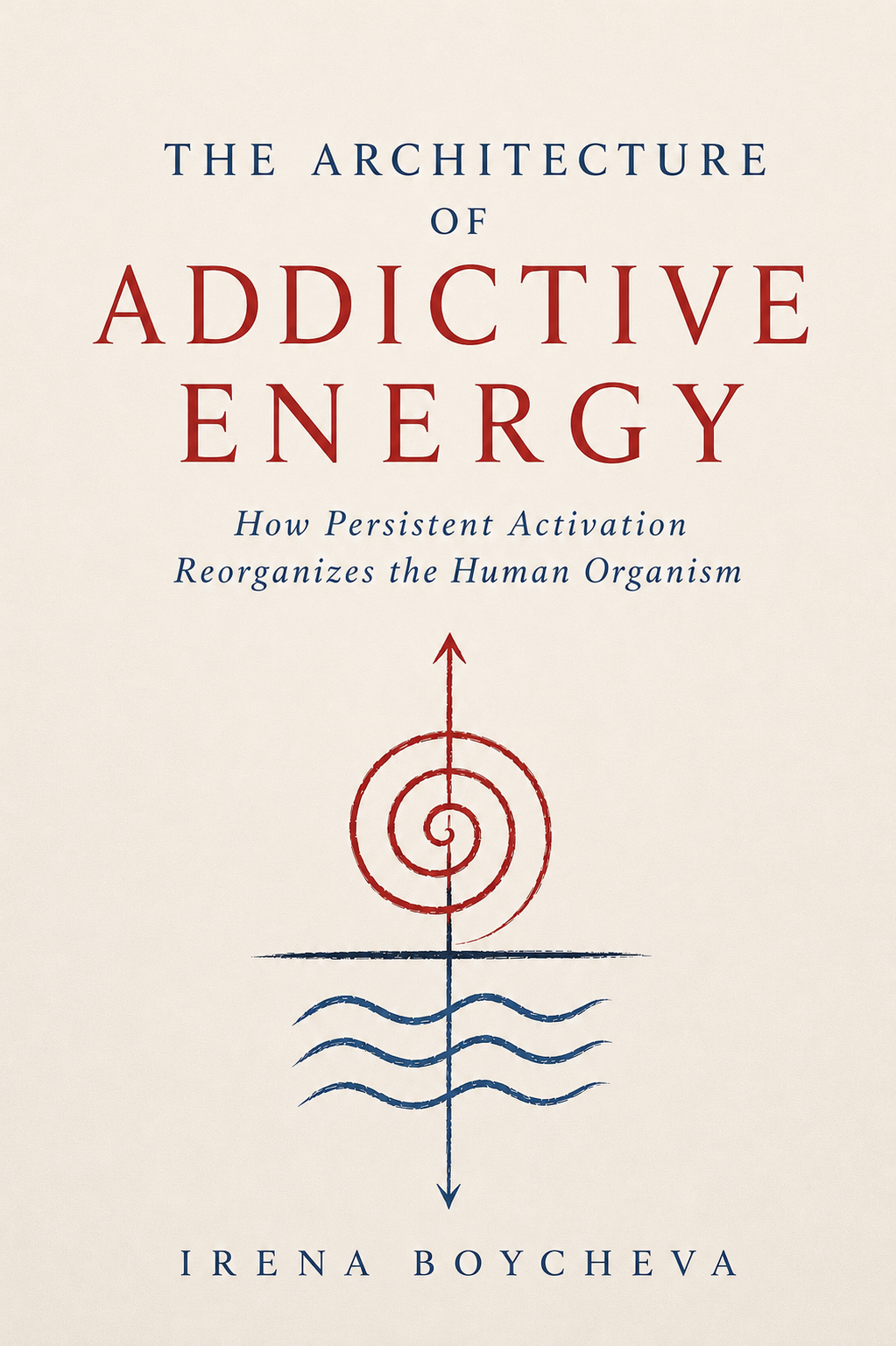
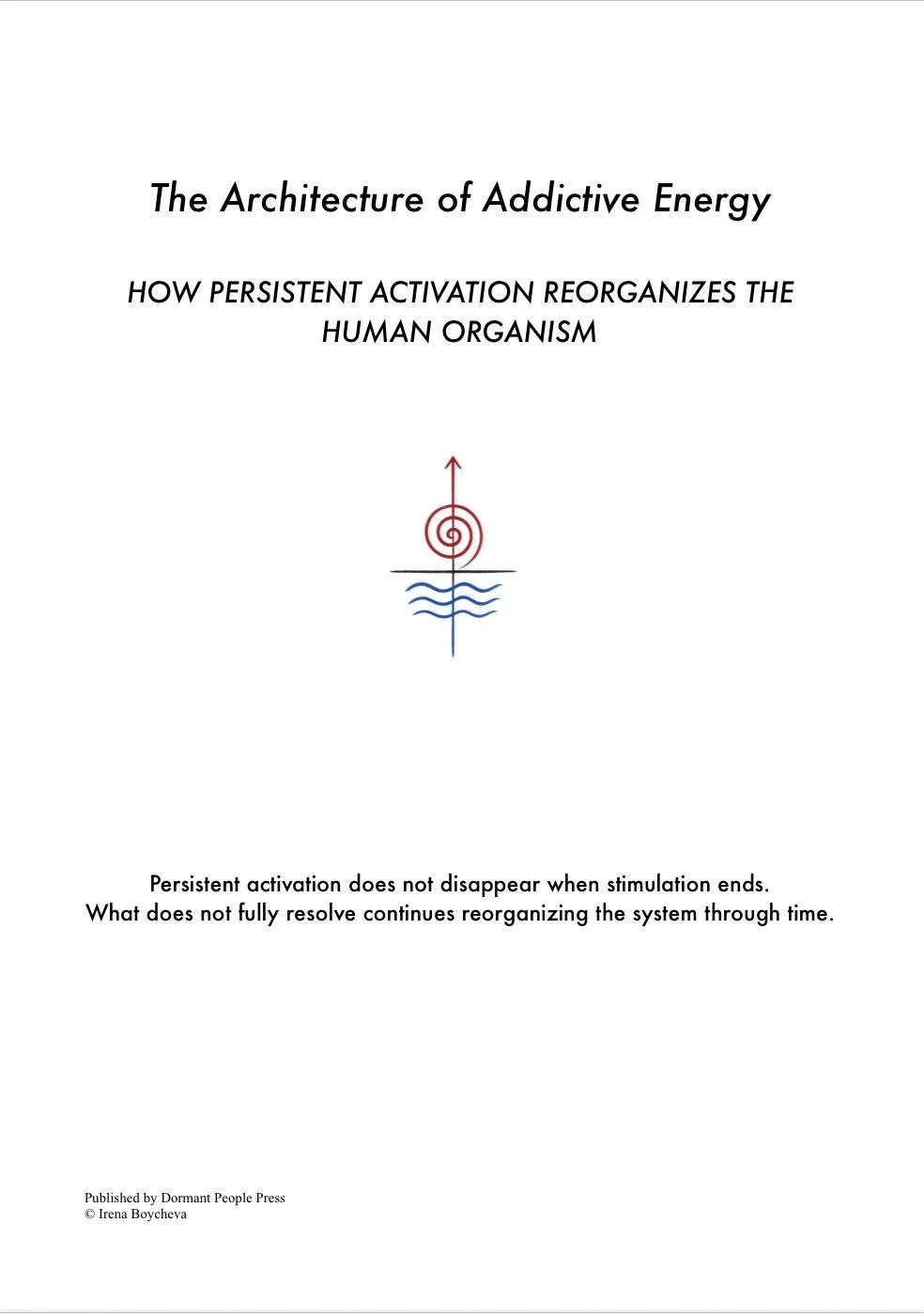
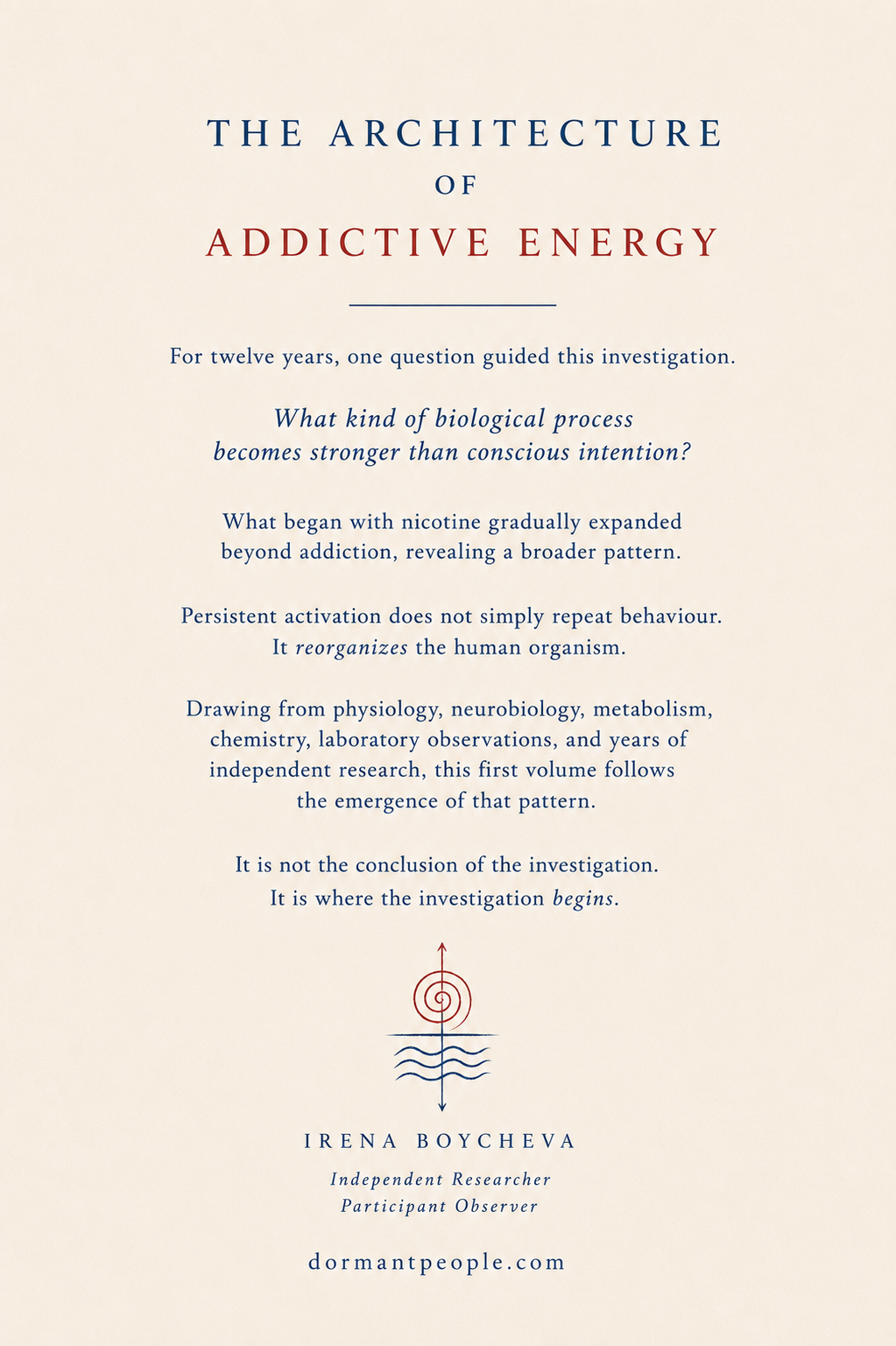
The Architecture of Addictive Energy explores how persistent stimulation affects regulatory processes across the nervous system, endocrine axes, and cellular membranes. When activation begins but does not fully resolve, repetition becomes the organism’s attempt to stabilize an unfinished state.

By examining the structural conditions that sustain activation, this work provides a new framework for understanding why modern environments make completion increasingly difficult — and why the ability to fully resolve biological signals is central to human potential.

Addiction is often treated as a behavioral problem.

This book approaches it as a biological timing problem.

The Architecture of Addictive Energy explores how persistent stimulation affects regulatory processes across the nervous system, endocrine axes, and cellular membranes. When activation begins but does not fully resolve, repetition becomes the organism’s attempt to stabilize an unfinished state.

By examining the structural conditions that sustain activation, this work provides a new framework for understanding why modern environments make completion increasingly difficult — and why the ability to fully resolve biological signals is central to human potential.