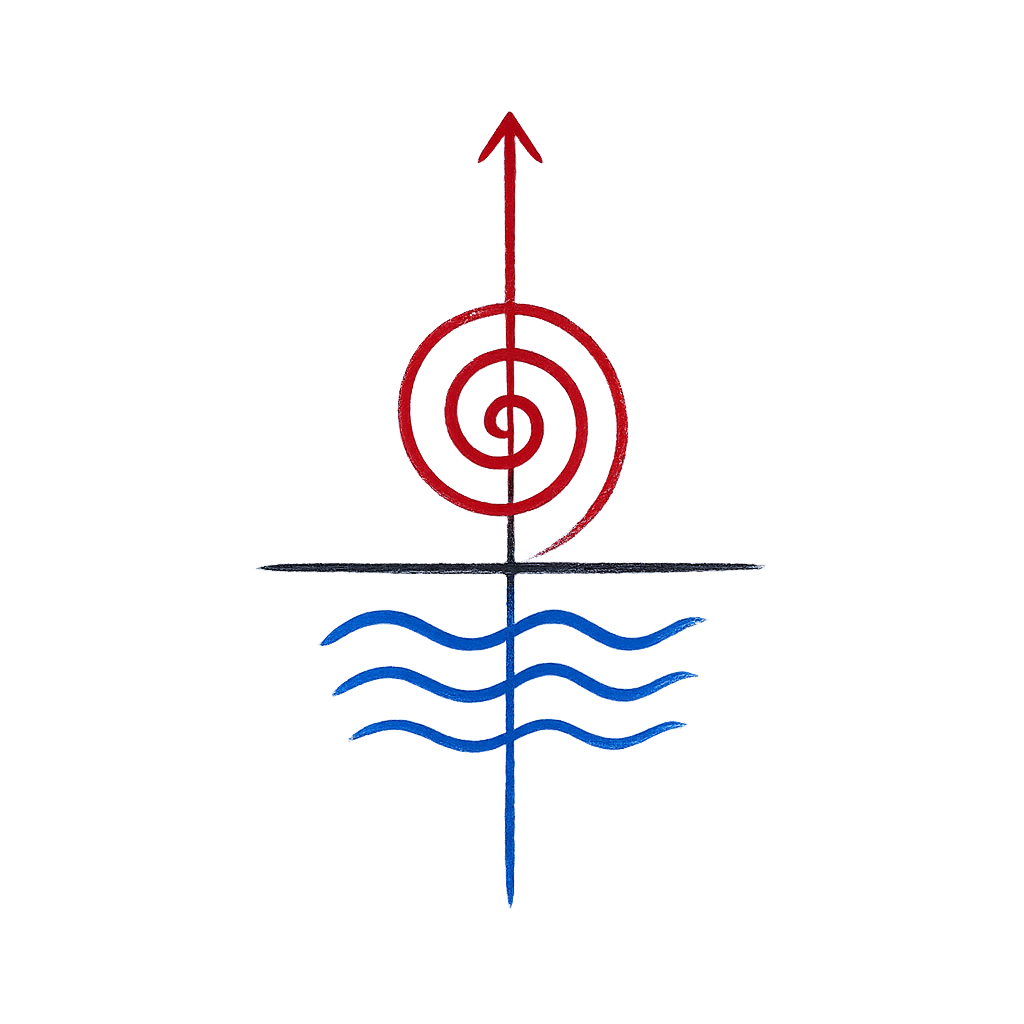
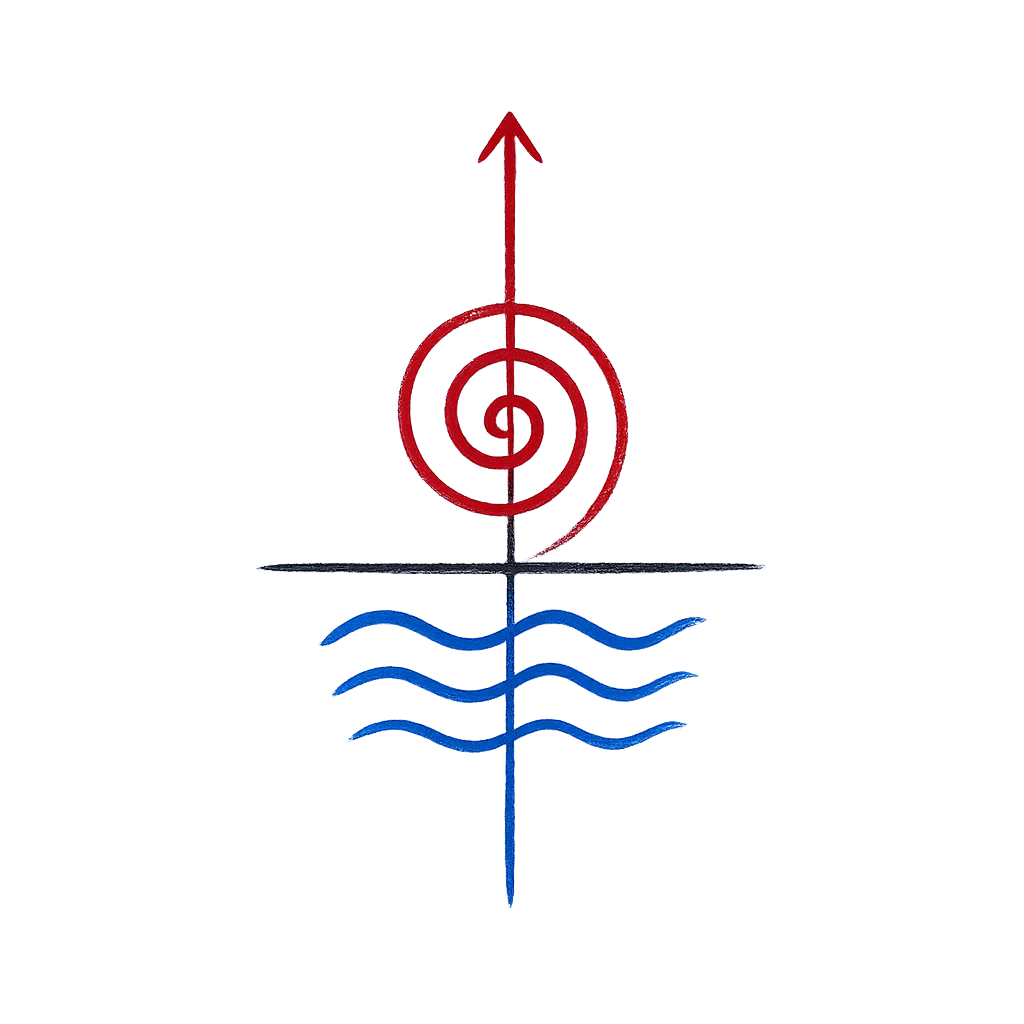
The Architecture of Addictive Energy
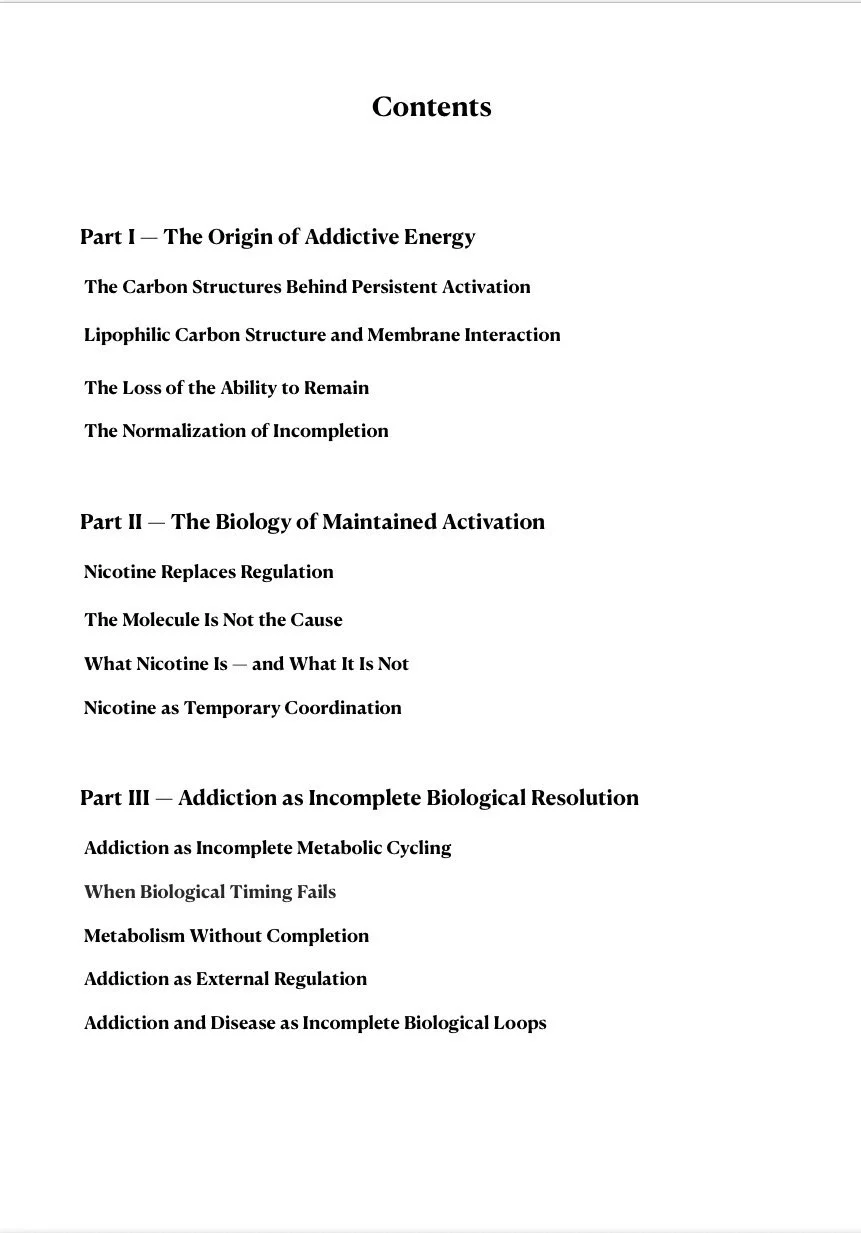
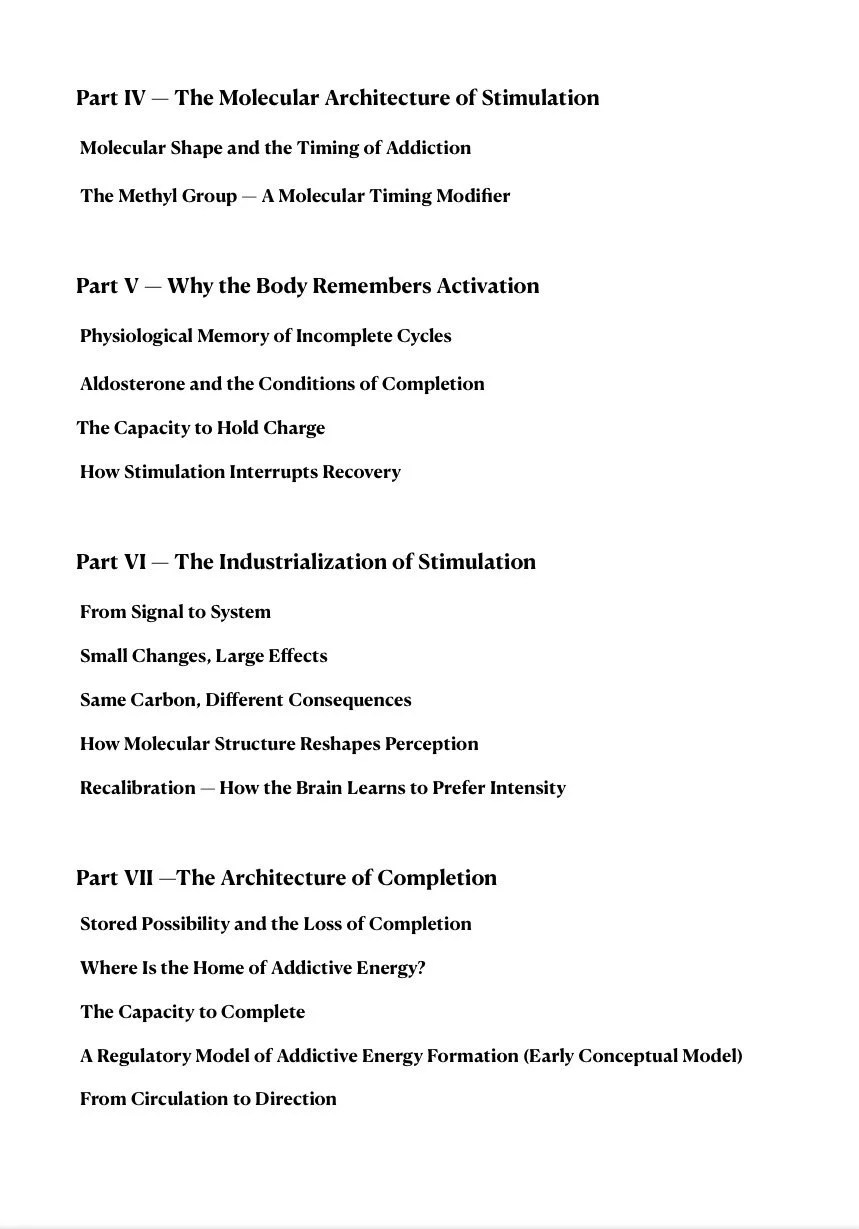
Contents
Part I — The Origin of Addictive Activation
The Deep Origin of Addictive Molecules
Lipophilic Carbon Structure and Membrane Interaction
From Substance to Signal
How Timing Turns Regulation into Dependence
A Fundamental Biological Loss
Stability Without Completion
Part II — The Biology of Maintained Activation
Maintaining the Unfinished State
Nicotine as a Substitute for Regulation
Why the Molecule Is Not the Cause
Why the Substance Is Not the Nutrient
Nicotine and the Search for Relief
Nicotinic Receptors and the Timing of Neural Signals
Part III — Addiction as Incomplete Biological Resolution
Addiction as Mislearned Regulation Without Completion
Metabolic Diagnosis of Addiction
When Biological Timing Fails
Psyche and Metabolism
Addiction as a Systemic Biological Process
Addiction and Chronic Disease as Looping Physiology
Part IV — The Molecular Architecture of Stimulation
Tetrahedral Molecule Structure and Addiction
The Precision Tuning Knob — The Methyl Group
Part V — Why the Body Remembers Activation
Incomplete Cycles and Physiological Memory
How the Body Finishes Activation
The Power of Holding Energy
How Stimulation Interrupts Recovery
Activation and Recovery of Ion Gradients
The Electrical Cost of Stimulation
Part VI — The Industrialization of Stimulation
Narcomankind — The Industrialization of Reward
Regulation and Chemical Amplification
Same Carbon, Different Consequence
Tetrahedral Hijacking — How Molecular Geometry Captures Neural Signals
Recalibration — How the Brain Learns to Prefer Intensity
Part VII —The Architecture of Completion
Stored Possibility: The Biology of Resting Potential
Where Is the Home of Addictive Energy?
Human Potential — The Return of Completion
Biological Pathway of Addictive Energy Formation
From Circulation to Direction
The Axis of Completion
Axis Formation Under Extreme Gradients